
Insights
Insights
Real Estate Across Generations: A Perspective for Next-Gen Families
March 26, 2026
For many next-gen families, inheriting a real estate portfolio represents both continuity and inflection. The assets often reflect years of disciplined acquisition and favorable market timing. However, the capabilities required to preserve and grow that value are distinct from those that created it.
While ownership provides control over the investment, asset management often drives its performance. That distinction becomes more pronounced in an environment defined by tighter capital, elevated operating costs, and greater dispersion in asset-level outcomes. Passive ownership introduces risks that are not always visible when looking at past performance.
Ownership Alone Does Not Preserve Value
Inherited portfolios are frequently shaped by a prior cycle that rewarded duration and favorable supply dynamics. Strong performance was often supported by declining interest rates, limited new supply, and steady rent growth. That environment allowed assets to perform with varying degrees of operational intervention.
Today, performance is more dependent on execution. Leasing strategy, capital deployment, expense control, and financing decisions directly influence outcomes. The margin for error has narrowed, and results are increasingly driven by how actively the asset is managed.
Managing through this environment requires more than familiarity with the assets. It requires a clearly defined business plan, tailored to the family’s broader objectives. For next-gen families, those objectives often extend beyond return maximization to include liquidity needs, tax considerations, generational planning, and risk tolerance.
This gap often leaves next-gen families relying on legacy assumptions that may no longer hold. Market signals indicating shifting fundamentals can be overlooked or misinterpreted, leading to gradual underperformance.
Where Portfolio Value Erodes for Next-Generation Families
The early stages of portfolio stewardship tend to follow a consistent pattern. Underperformance rarely stems from a single decision. It is typically the cumulative effect of incremental choices made without a cohesive framework.
Reliance on Historical Performance
Strong trailing performance can create a false sense of stability, particularly in periods following sustained rent growth and high occupancy. Historical results are often used as a proxy for future performance, even as underlying market conditions begin to shift. Changes in demand drivers, new supply entering the market, and evolving capital markets dynamics can materially impact forward performance, but these signals are frequently overlooked when recent financials remain strong. As a result, rent levels, occupancy assumptions, and asset valuations are evaluated through a backward-looking lens rather than a forward-looking strategy grounded in current conditions.
This reliance on historical performance can delay critical decisions. Over time, these incremental missteps compound, reducing an asset’s ability to adapt and perform in a changing environment. Active asset management requires a constant reassessment of forward-looking risks and opportunities, ensuring that decisions reflect where the market is going, not where it has been.
Underinvestment in the Asset Base
When capital decisions are not anchored to a clearly defined business plan and supported by active oversight, expenditures can be deferred without full consideration of long-term objectives. In some cases, this reflects a desire to preserve current cash flow or maintain historical performance expectations. In others, it stems from limited visibility into how incremental capital translates into future income and value. Property managers may also defer capital needs to avoid near-term disruption. While these decisions can appear reasonable in isolation, they risk being made without a clear connection to the asset’s long-term positioning.
Over time, this dynamic can weaken an asset’s competitive position. Units fall behind evolving tenant expectations, common areas lose relevance, and operational inefficiencies grow more detrimental. As competing properties invest and reposition, the asset gradually loses pricing power and leasing momentum, reducing both income quality and long-term value.
Misalignment in Property Management
Property management is often treated as a cost center rather than a performance driver. Selection decisions may prioritize fees or legacy relationships without a clear evaluation of current results and capabilities, leading to inconsistent execution and limited transparency.
A more fundamental issue is incentive alignment. Standard fee structures tied to revenue may not fully reflect the family’s performance objectives. Without a deliberate framework, managers are not directly rewarded for improving net operating income, leasing efficiency, or expense discipline. Aligning incentives requires clearly defined benchmarks across leasing, rent growth, occupancy, bad debt, and controllable expenses, supported by compensation structures tied to performance.
A set-it-and-forget-it approach rarely produces consistent results. Property-level performance requires active oversight through regular operating reviews, variance analysis, and real-time visibility into key metrics. Without this structure, incremental underperformance compounds over time into lower income and reduced asset value.
The Role of Asset Management
Asset management introduces a structured framework that aligns capital, operations, and market conditions.
Capital allocation becomes disciplined, with each investment evaluated against defined return thresholds. Operational oversight becomes active, with property management held accountable to performance metrics tied to leasing, expenses, and tenant retention. Portfolio strategy becomes market-driven, informed by external signals rather than internal assumptions. Reporting becomes transparent, providing clarity on both performance and risk.
This framework strengthens ownership by improving the quality and consistency of decision-making.
Integrating Market Signals into Decision-Making
Asset management is grounded in connecting asset-level performance with broader market dynamics. Public market indicators, capital flows, and supply pipeline trends provide forward-looking signals that inform both risk and opportunity.
Shifts in lending standards or credit spreads often precede changes in private market valuations. Similarly, elevated supply in a submarket can signal near-term pressure on rents and occupancy, while constrained pipelines may support future growth.
Absent this context, decisions tend to be reactive. Leasing concessions are introduced after occupancy declines rather than in anticipation of competitive pressure. Capital projects are delayed until performance deteriorates, increasing both cost and execution risk. Integrating these signals enables proactive positioning and more consistent outcomes.
Explore relevant insights from Hughes Capital Partners
Read more on the current economic environment and the Fed’s mission of price stability in our previous article on considerations for investment in an inflationary period, or the challenges that face new home and apartment builders in our article on the mounting headwinds for the new supply pipeline.
Identifying the Inflection Point
The need for asset management is driven by complexity, capital at risk, and the family’s desired level of engagement. Common indicators include increasing variance to budget, unclear capital prioritization, limited visibility into operations, and reliance on property managers for strategic decisions.
At this stage, the cost of inaction often exceeds the cost of implementing a structured approach. Introducing asset management can stabilize performance, improve visibility, and better position the portfolio for long-term growth.
Preserving Family Wealth
Inherited portfolios often begin with a strong foundation. The objective is to ensure that foundation remains relevant in a changing market.
This requires a shift from passive ownership to active stewardship. Performance becomes a function of disciplined execution, informed by data and aligned with market conditions. Over time, this approach supports more consistent income, greater downside protection, and improved flexibility around hold or disposition decisions.
For next-gen families, the transition is less about learning real estate from first principles and more about adopting a framework for managing it. When implemented effectively, that framework allows inherited assets to perform with the same level of rigor as institutional portfolios while preserving the long-term perspective that defines family ownership.
Sign up to receive our latest insights and ideas directly to your inbox by subscribing to HCP Insights.
Interested in learning more about Family Office Advisory? Connect with our team today.
Family Office Advisory
Hughes Capital Partners offers comprehensive services designed to help manage the full cycle of your real estate investments so you can focus on your business, career or other endeavors knowing that your assets are in good hands.
Related Insights

The Rise of Private Credit in Commercial Real Estate
Since late 2021, the commercial real estate (CRE) industry has experienced profound shifts caused by rising interest rates, constrained liquidity, and changes in investor strategies.
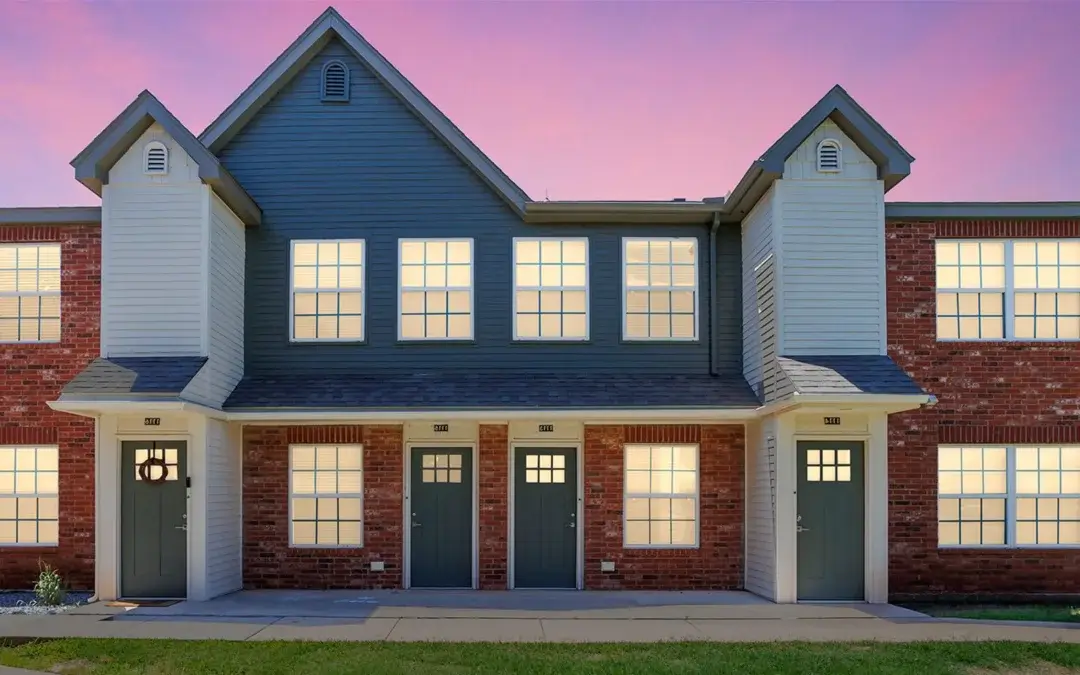
Hughes Capital Partners Advises Single-Family Office in Acquisition of Oklahoma City Apartments
Hughes Capital Partners is proud to announce the successful acquisition of The Pointe at North Penn on behalf of a single-family office.

Signal Intelligence: Navigating Private Real Estate by Leveraging the Public Markets
The public markets frequently offer valuable insights to private market investors, serving as a crucial predictor of what lies ahead.
Start the Conversation
Committed to delivering institutional-caliber investment opportunities, strategy, and execution.